
Gold Medal EMS
Train smarter. Get faster. Perform like a champion.
MARK MCKOY — OLYMPIC CHAMPION

THE EMS EDGE
I am Mark McKoy, Olympic Champion and lifelong student of speed, strength, and precision. My journey to becoming the best in the world was built on disciplined training and a relentless drive to improve.
EMS became part of my training approach because it helped me activate more muscle, train with focus, and support recovery without losing the quality of my movement. I didn’t win gold by following the herd. I won by questioning everything — including how I trained. That same mindset drives McKoy Gold EMS today: use smart technology, train with purpose, and keep pushing toward your best.
GOLD-STANDARD FITNESS EVOLUTION
01

02

03

04

Traditional Strength Training
The Rise of EMS
THE EVOLUTION OF EMS
THE FUTURE OF FITNESS
While the Western world refined strength training through barbells, dumbbells, and structured resistance programs, a different vision was taking shape in Russia. Researchers and performance coaches explored electrical muscle stimulation (EMS) as a way to activate muscle fibers while athletes trained, recovered, and prepared for competition. This approach aimed to complement traditional exercise by engaging the body with targeted electrical impulses, helping athletes pursue strength, power, and efficiency in less time. It represented a bold shift from simply lifting heavier weights to using technology to make every contraction more focused and purposeful.Where conventional weight training focused on progressive loads and repeated movement, Russian EMS research explored a more direct connection between the nervous system and muscular performance. Supporters believed this could help athletes recruit muscle more efficiently, train with less joint stress, and push beyond the limits of ordinary routines. Rather than replacing disciplined training, EMS was developed as a high-performance tool designed to amplify it—laying the groundwork for the smarter, technology-driven fitness systems shaping the future.
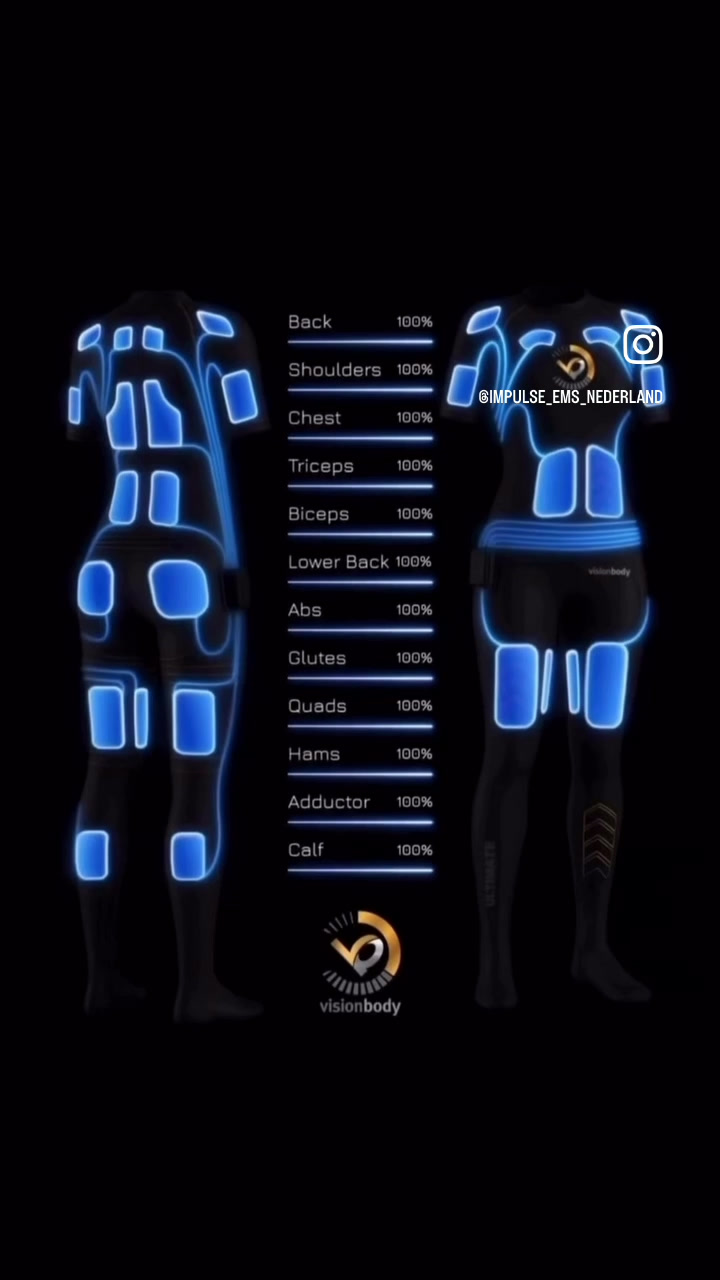
EMS training, or Electrical Muscle Stimulation, combines exercise with gentle electrical impulses that encourage your muscles to contract. During a session, you wear a specially designed suit or use electrode pads placed on key muscle groups. A trained coach guides you through controlled movements such as squats, lunges, presses, and core exercises while adjusting the intensity to your comfort level. Because several muscle groups can be activated at the same time, EMS workouts are often short and time-efficient. They deliver muscle activation, strength, endurance, and body awareness in a fraction of the time it takes in a traditional gym. Most athletes are still training like it’s 1995 — grinding their joints under barbells and mistaking soreness for progress. EMS is for the ones who want what’s next.
EMS training has evolved from basic electrical muscle stimulation into a more refined and connected approach to fitness. Early systems focused mainly on activating muscles through controlled electrical impulses, while newer technology offers improved comfort, precision, and coaching support. In recent years, Electro-Muscle Activation (EMA) has added another step by combining targeted stimulation with active movement and personalized training. This modern approach can help users engage more muscle groups, train efficiently, and better understand how their bodies respond during a workout. As technology continues to improve, EMS and EMA are becoming valuable tools to make training safer, more efficient and more effective than ever before.
The future of fitness will combine EMS and Electro-Muscle Activation (EMA) with intelligent coaching to help people maximize performance, health, and fitness. By activating more muscle groups in less time, these technologies can make training more efficient without replacing the discipline, skill, or sport-specific work that truly drives progress. The time saved can be invested in more important parts of training—refining technique, building strategy, improving mobility, recovering well, and enjoying the sport itself. Used responsibly alongside active movement and expert guidance, EMS and EMA can make every session more focused, purposeful, and effective.

98%
Muscle Activation
24
Muscle Activation Sites
0.01s
Response Latency
100%
AI Precision
THE EMS ADVANTAGE
The 21st century has rendered traditional weightlifting obsolete. We have transitioned from heavy iron to high-tech precision, where every movement is calculated and every session is optimized for peak performance through industrial-grade innovation.
TRAIN SMARTER. PERFORM STRONGER.
Traditional weightlifting is evolving through high-tech resistance training. Experience the future of fitness as we move from heavy iron to intelligent workouts.
